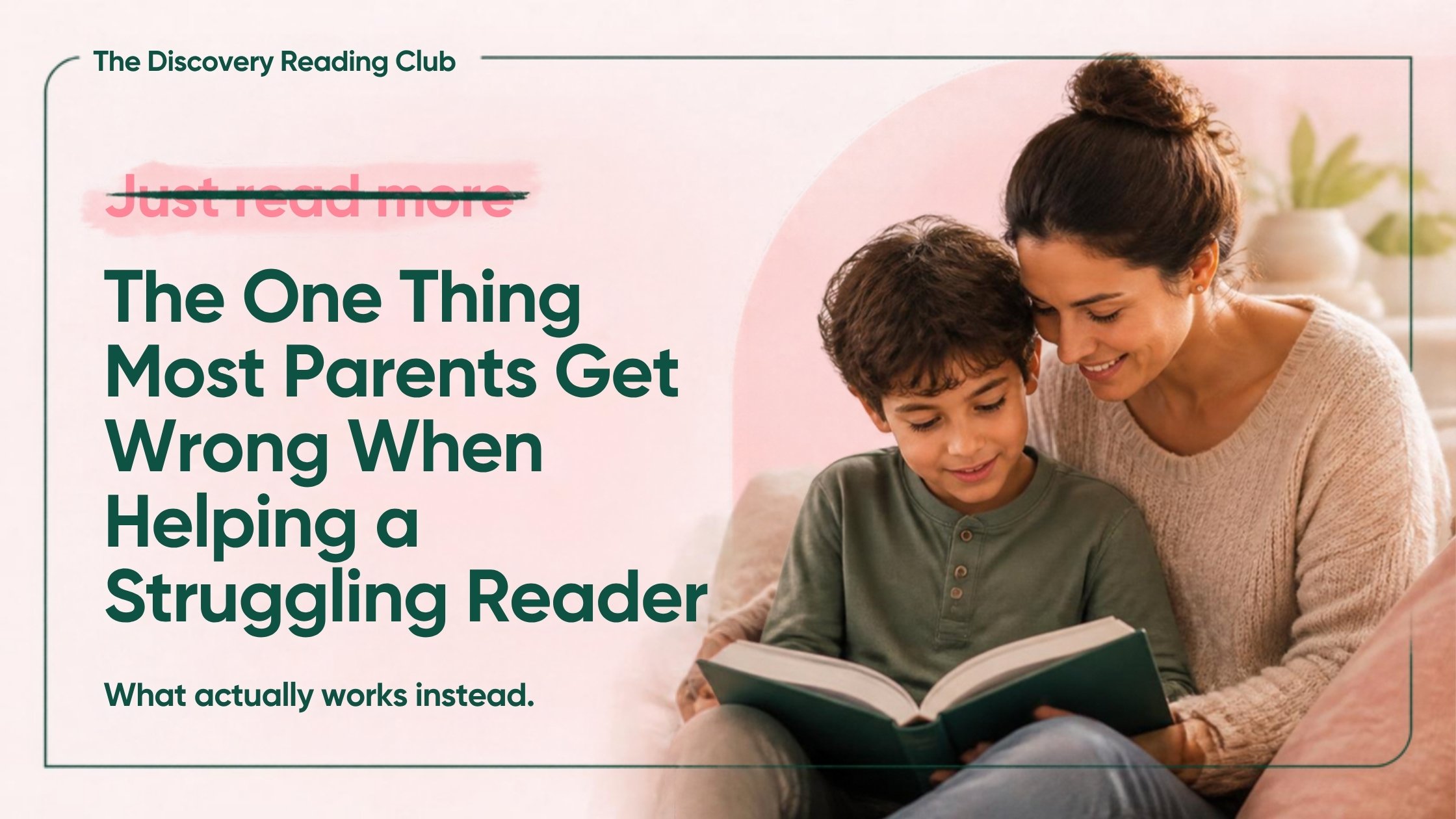
"Just read more."
It's the most common advice parents of struggling readers get. From teachers, from other parents, from well-meaning family members. And it sounds so logical. More practice should equal more progress, right?
Not always. And for many kids, especially kids with dyslexia, "just read more" can actually make things worse.
Here's why, and what to do instead.
The problem with "more reading"
When a child is struggling to decode words, making them read more is like asking someone who can't swim to spend more time in the deep end. They're not practicing a skill. They're just failing repeatedly.
What typically happens: the child sits down with a book that's too hard. They guess at words based on the first letter or the pictures. They skip words they don't know. They read so slowly that by the end of a sentence, they've forgotten the beginning. The parent gets frustrated. The child gets frustrated. Everyone ends the session feeling worse than when they started.
That's not reading practice. That's an exercise in failure. And it teaches the child one thing very effectively: reading is painful.
What actually works
The research is clear on this. Decades of reading science (sometimes called "the science of reading") point to the same conclusion: struggling readers need explicit, systematic instruction in how the code of written English actually works.
That means teaching letter-sound relationships directly. Teaching them in a logical order. Practicing each pattern until it's automatic before moving on. And engaging multiple senses while doing it -- hands, eyes, ears, and voice all working together.
This approach is called structured literacy. The most well-known method is Orton-Gillingham (OG), which was originally developed for students with dyslexia. It works by teaching kids to decode words sound by sound rather than memorize them whole or guess from context.
Three things you can start doing today
You don't need special training to shift your approach at home. Here are three changes that make a real difference:
1. Match the book to the skill level, not the grade level.
Find books where your child can read about 95% of the words correctly. Yes, that might mean a second grader reading a book "meant for" kindergartners. That's fine. Reading at an appropriate level builds fluency and confidence. Reading above their level builds frustration and avoidance.
For kids working on phonics, decodable books are even better. These are books written to match the specific letter-sound patterns a child has already learned. Every word is within reach. The child reads a "real" book and succeeds.
2. Focus on sounds, not letters.
Before a child can read, they need to hear the individual sounds in words. This is called phonemic awareness, and it's the single biggest predictor of reading success. You can practice this without any materials at all.
Try this: say a word out loud ("cat"). Ask your child how many sounds they hear (three: /k/ /a/ /t/). Then try it with "ship" (still three: /sh/ /i/ /p/). Then "string" (five: /s/ /t/ /r/ /i/ /ng/).
This takes five minutes. It costs nothing. And it builds the foundation everything else depends on.
3. Make it multisensory.
The research behind Orton-Gillingham shows that engaging multiple senses at the same time helps the brain build stronger reading connections. This is especially important for kids with dyslexia.
Some simple ways to do this: trace letters in sand or shaving cream while saying the sound. Build words with magnetic letters while sounding them out. Tap your arm once for each sound in a word, then spell it. Use colored tiles to represent different sounds.
The key is pairing what they see with what they hear with what they touch. That combination is what makes learning stick.
I put together a free guide for this
I took everything I know about helping kids read at home and put it in a free downloadable guide called "Getting Started with Structured Literacy at Home." It covers:
- What structured literacy is and why it works
- How to figure out where your child is right now
- Simple activities you can do at home in 10-15 minutes
- What to look for in books and materials
- When to seek professional help
It's free. No email sequence, no upsell on the download page. Just the guide.
And if you want even more, I have a free membership tier at The Discovery Reading Club with sample games, printable worksheets, and hands-on activities, all built on structured literacy and Orton-Gillingham principles.
Talk soon,
Candace