If your child has been diagnosed with dyslexia, or you suspect they might have it, you've probably come across the term Orton-Gillingham. Maybe a teacher mentioned it. Maybe you found it in a Facebook group at 11pm while searching for answers. Either way, you're here, and I want to give you a clear picture of what it actually is and whether you can use it at home.
The short version
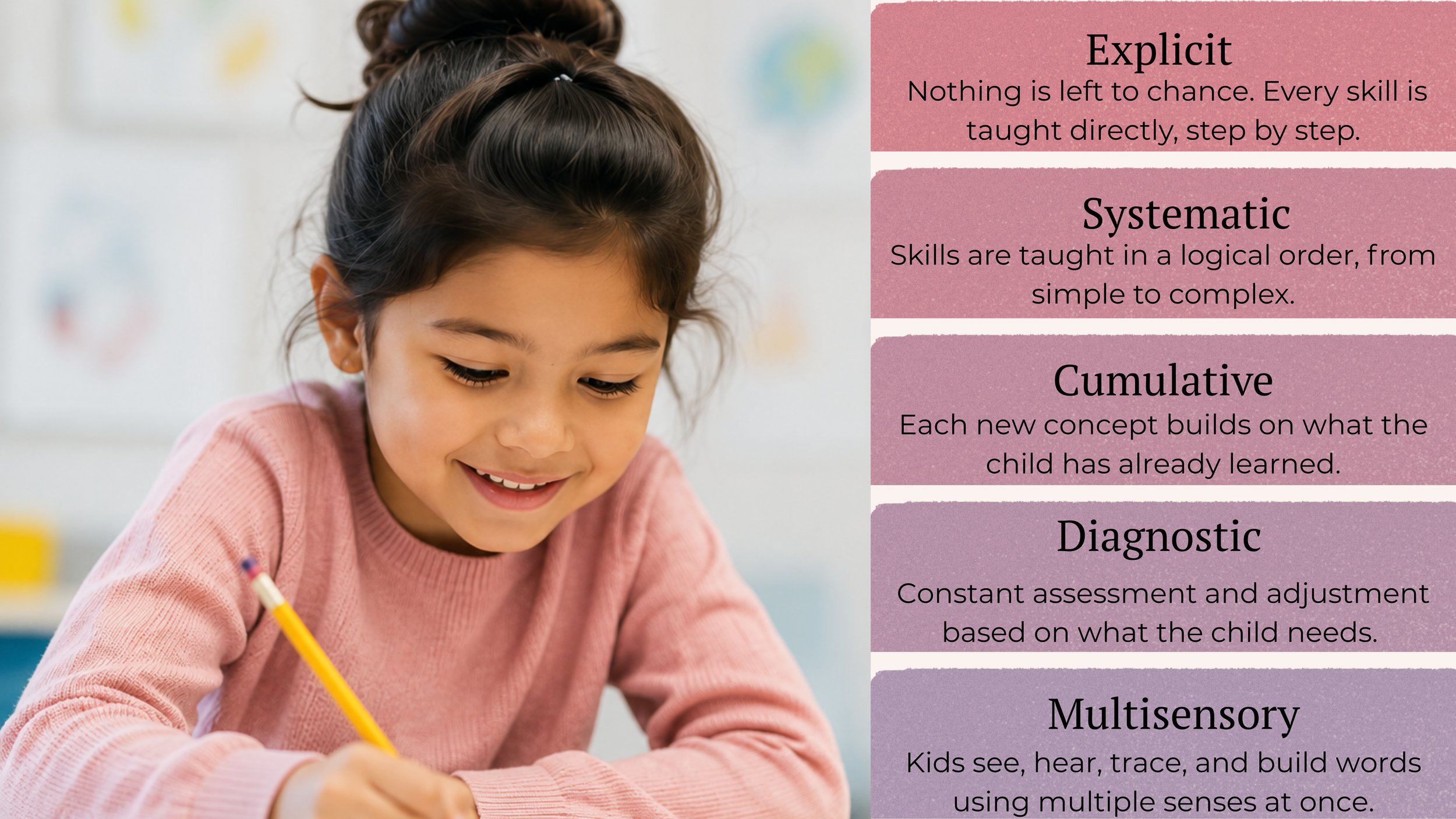
Orton-Gillingham (OG) is a way of teaching reading that's explicit, systematic, and multisensory. It was originally designed for students with dyslexia, but it works well for all struggling readers. It's been around since the 1930s and it's backed by decades of research on how the brain learns to read.
Instead of asking kids to memorize whole words or guess from context, OG teaches the code of the English language directly. Letter sounds, spelling patterns, syllable types, word roots. Each concept is taught in a specific order, and the student doesn't move on until they've mastered what came before.
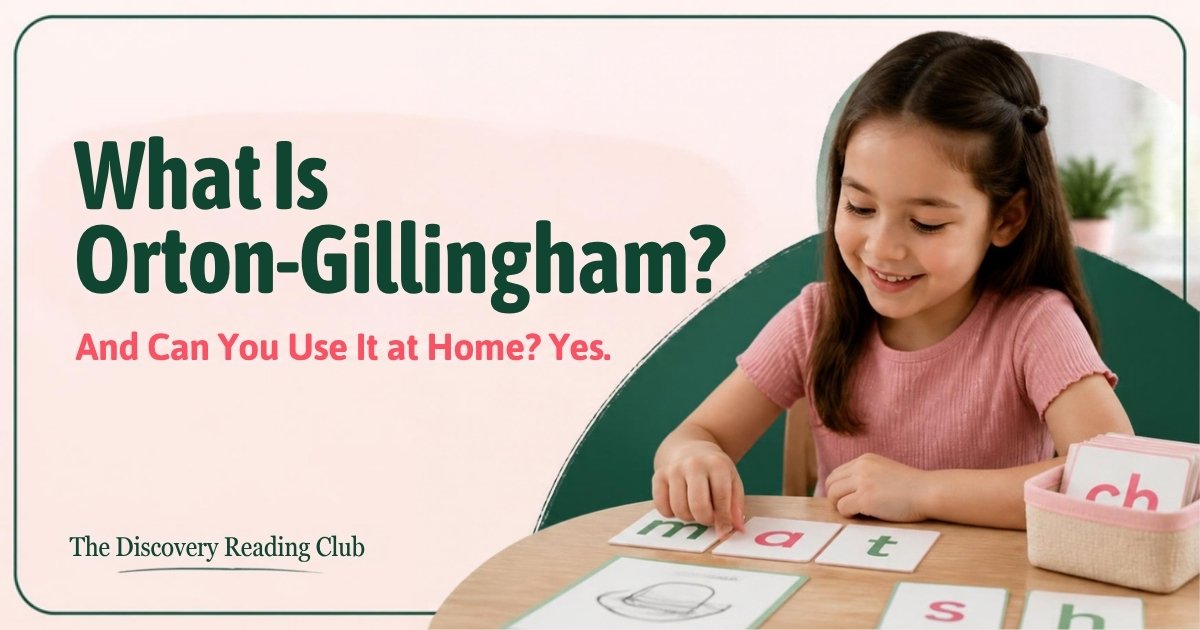
The "multisensory" part means you engage more than one sense at a time. A child might trace a letter in sand while saying the sound while looking at the letter on a card. Hands, ears, eyes, mouth, all working together. This is what helps the brain build the connections that make reading automatic.
How is it different from what schools do?
Most schools use a "balanced literacy" approach, which blends phonics instruction with strategies like guessing from pictures, using context clues, and memorizing high-frequency words by sight. For a lot of kids, this works fine. Their brains are wired in a way that picks up reading patterns naturally.
But for kids with dyslexia (roughly 1 in 5 people), this approach doesn't work. Their brains process language differently, and they need the code taught to them directly and systematically. That's what OG does.
The difference is like the difference between learning to swim by watching other people swim versus having someone teach you each stroke, one at a time, in the shallow end. Both can work. But if you're struggling, the second approach is the one that will actually get you swimming.
Can I use Orton-Gillingham at home?
Yes, with some caveats.
A full OG tutoring program is delivered by a trained and certified practitioner who assesses your child, builds a custom plan, and adjusts the instruction session by session. That level of individualized, diagnostic teaching is hard to replicate on your own, and if your child has significant reading difficulties, I'd recommend working with a trained professional (I'm completing my OG certification through IMSE right now, and this is exactly what I do in my tutoring practice).
But the principles of OG are absolutely something you can use at home. Here's what that looks like in practice:
Be explicit. Don't assume your child will figure out a pattern on their own. Teach it directly. "This letter makes this sound. These two letters together make this sound. Here are five words that use that pattern."
Be systematic. Work on one skill at a time, in order. Don't jump to long vowel patterns if your child hasn't mastered short vowels yet. Build on what they know.
Be multisensory. Get more than just their eyes involved. Trace letters in shaving cream. Tap out sounds on the table. Build words with magnetic letters. Use colored tiles to represent sounds. The more senses engaged, the better the brain learns.
Be patient. OG is designed to go at the student's pace. If your child needs three weeks on a concept, give them three weeks. Rushing creates gaps, and gaps create frustration.
What does an OG activity look like at home?
Here's a simple one you can try tonight:
Tap and Spell: Say a word out loud (start with three-sound words like "cat" or "ship"). Have your child tap their arm once for each sound they hear. Then have them spell the word, connecting each tap to a letter or letter combination.
This builds phonemic segmentation, which is one of the most important foundational skills for reading and spelling. It takes about 10 minutes. Most kids think it's a game.
I have a library of activities like this in The Discovery Reading Club, all built on OG and structured literacy principles. You can explore some of them for free with a free membership account.
What to look for in an OG tutor
If you decide to work with a professional, here are the things that matter:
Training matters more than certification titles. Ask where they were trained and how many hours of practicum they completed. IMSE, the Wilson Reading System, Barton, and the Academy of Orton-Gillingham are all reputable programs.
They should assess first. An OG tutor who starts instruction without assessing your child is a red flag. The whole point is to teach to the individual, and that requires knowing where they are.
Sessions should be structured but not scripted. A good OG tutor follows a lesson structure (review, new concept, practice, application) but adapts constantly based on how the student responds. If your child's tutor is reading from a script, that's not OG.
They should be able to explain what they're doing and why. Ask them. A trained OG practitioner can tell you exactly which skill they're targeting, why it comes next in the sequence, and how they'll know when your child has mastered it.
I've written more about this in my post on how to choose a reading tutor.
The bottom line
Orton-Gillingham is the gold standard for teaching reading to kids with dyslexia, and its principles benefit every struggling reader. You can absolutely use OG-based activities at home to support your child's reading development. For kids with significant difficulties, pairing home practice with professional OG instruction is the most powerful combination.
If you want to try some OG-based activities at home, I've built a whole library of them. You can create a free account at The Discovery Reading Club to get started:
And if you're in the Bozeman area and want to talk about whether your child might benefit from 1-on-1 support, you can always text me at (406) 579-0449 or book a call.
Talk soon,
Candace