Some kids can read every word on the page and still have no idea what the story was about. If you've ever asked "What happened?" and gotten a blank stare, you know the feeling.
Comprehension is understanding what you read, and it doesn't come automatically once kids can decode. It's built through vocabulary, background knowledge, and the habit of thinking while reading. The best part: you can build it at home mostly by talking.
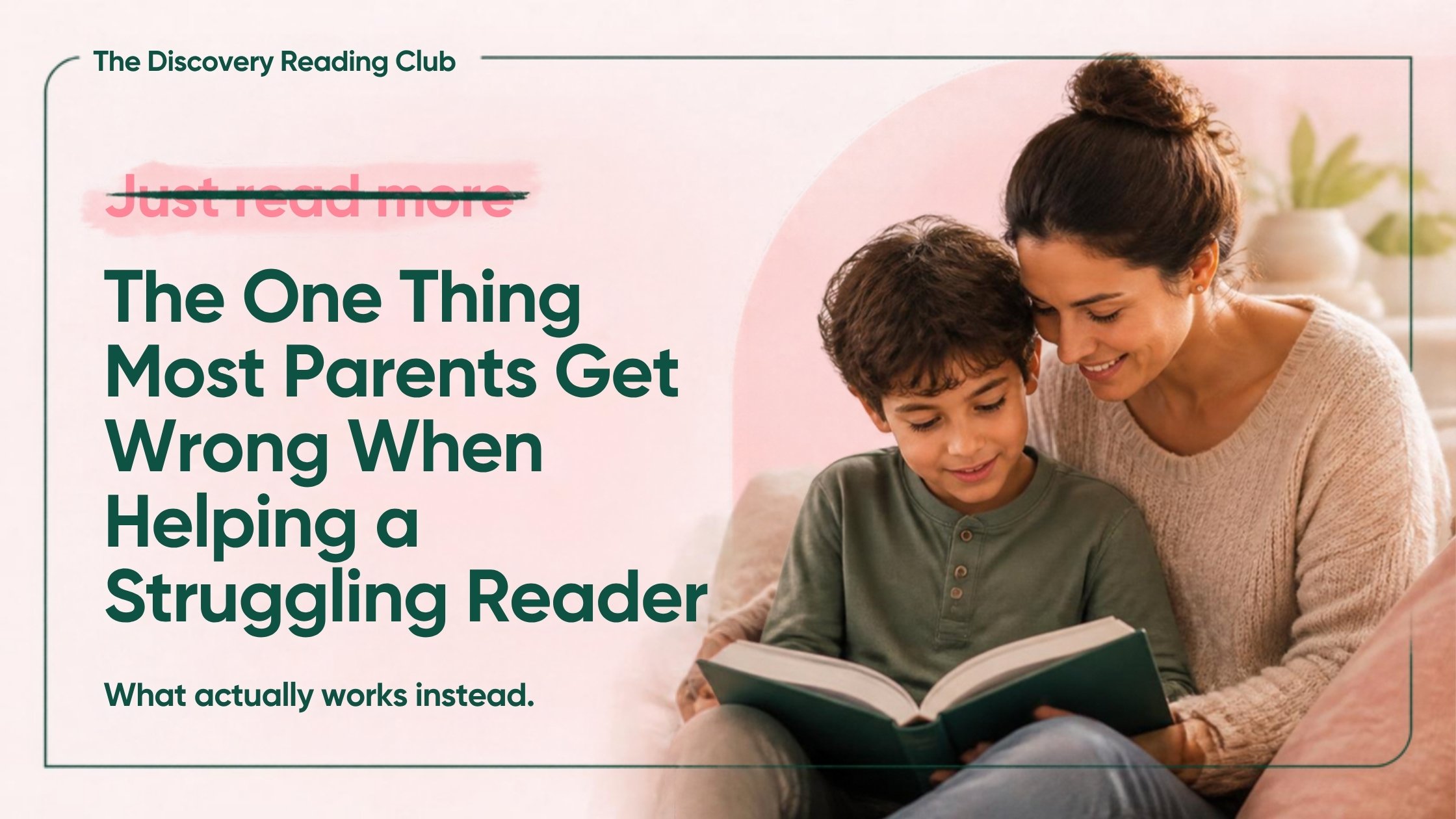
First, a quick check: if your child reads very slowly or works hard on every word, their brain is busy decoding and has little room left for meaning. In that case, start with fluency and decoding. (This post can help: helping a struggling reader.) The ideas below work best once reading is fairly smooth.
1. Talk before you read
Look at the cover and title together. "What do you think this is about? What do you already know about volcanoes?" Activating what they know gives new information somewhere to stick.
2. Stop and wonder
Pause once or twice per chapter and think out loud: "Hmm, I wonder why she lied to her brother." When you model wondering, kids start doing it on their own, and wondering is what good readers do constantly.
3. Make a mind movie
Ask your child to picture what's happening. "What does the cave look like in your head? What's the weather?" Kids who visualize remember and understand far more. If they can't picture it, that's a sign they've lost the thread, and it's a good time to re-read.
4. Retell it in five fingers
After reading, have your child retell the story using one finger for each: who (characters), where (setting), problem, events, and solution. It's quick, it's concrete, and it shows you exactly which part they missed.
5. Hunt for interesting words
When you hit a word your child doesn't know, talk about it. Figure it out from the sentence, break it into parts (un-happi-ness), or just tell them. Then try to use it at dinner. Vocabulary is one of the biggest drivers of comprehension.
6. Ask "why" and "how," not just "what"
"What color was the dog?" checks memory. "Why do you think the dog ran away?" builds thinking. Mix in questions that make your child infer, predict, and connect the story to their own life.
7. Read nonfiction about things they love
Background knowledge is a huge part of comprehension. Kids who know a lot about the world understand more of what they read. Let them dive into books about sharks, space, sports, or whatever lights them up. Reading about a favorite topic is comprehension practice that doesn't feel like work.
Keep it a conversation, not a quiz
The goal is for reading to feel like something you share, not a test after every chapter. One or two good questions per session is plenty.
Want a simple way to start?
My free 5-Day Reading Discovery Challenge gets kids reading for real reasons (researching what they love, following instructions to build something, teaching what they learned), which is exactly the kind of reading that builds understanding.
And for games and printables organized by skill, including comprehension and vocabulary, you can create a free Discovery Reading Club account.
Talk soon,
Candace