Kindergarten is a big year for reading. Kids go from knowing a few letters to sounding out simple words, and every child moves at a slightly different pace. If you're wondering whether your kindergartener is on track, here's a simple checklist of the skills most kids build this year, and an easy way to practice each one at home.
A quick note: this is a guide, not a test. Kids develop at different speeds, and a child who's a few months behind on one skill is usually fine. What matters is steady progress.
1. Hearing sounds in words (phonological awareness)
Before kids can read, they need to hear the parts of spoken words. By the end of kindergarten, most children can:
- tell whether two words rhyme (cat, hat)
- clap the syllables in a word (pen-cil)
- say the first sound in a word (/m/ in "map")
- blend sounds into a word (/s/ /u/ /n/ makes "sun")
Practice: play I Spy with sounds ("I spy something that starts with /b/"), or talk like a robot and let your child blend the sounds back together.
2. Knowing letter names and sounds
Most kids finish kindergarten knowing all (or nearly all) uppercase and lowercase letters and the most common sound each one makes.
Practice: focus on sounds more than names, since sounds are what kids blend into words. Write a letter in shaving cream or sand while saying its sound.
3. Sounding out simple words
By the end of the year, many kindergarteners can read short words with a consonant-vowel-consonant pattern, like cat, sit, hop, and bed, by sounding them out.
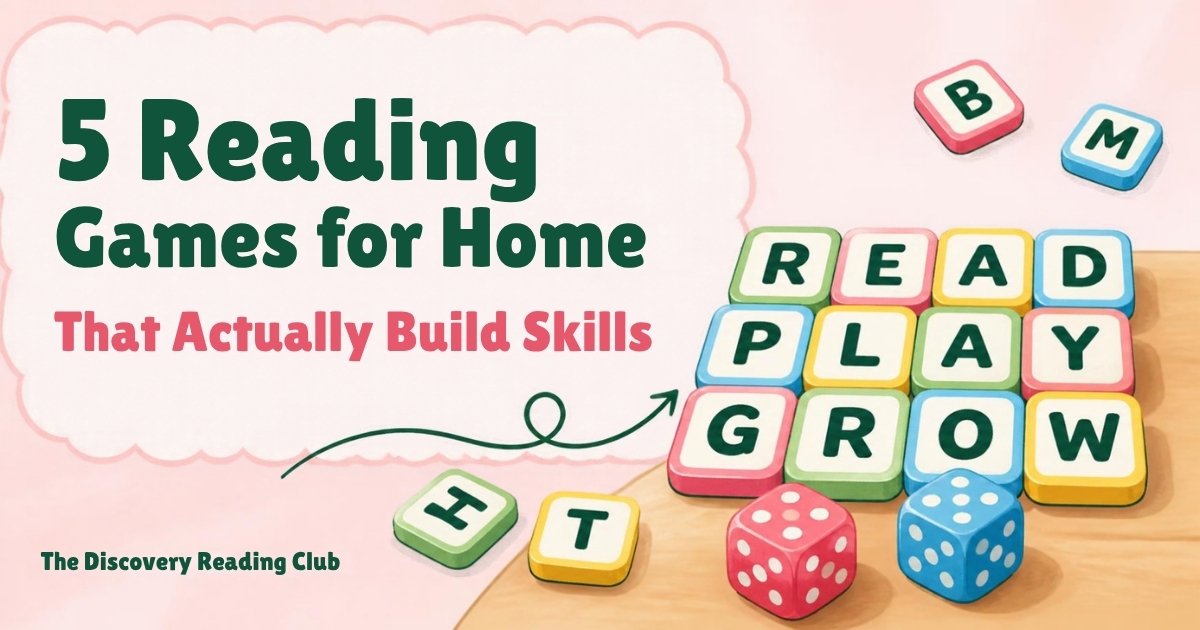
Practice: build words with magnetic letters, then change one letter at a time: cat, bat, bit, big. Each new word is a quick reading win.
4. Reading a few high-frequency words
Words like the, a, is, I, and, to, and said show up constantly. Kindergarteners usually learn a small set of these by sight.
Practice: don't just memorize the shape. Tap out the sounds, notice the tricky part, and use the word in a sentence. (Here's more on sight words vs. phonics.)
5. Understanding how books work
Kids learn that we read left to right and top to bottom, that words are separated by spaces, and that the words (not just the pictures) tell the story.
Practice: while you read aloud, occasionally point to the words as you go, and ask your child to show you where to start.
6. Talking about stories
Kindergarteners can usually retell a simple story, talk about characters, and guess what might happen next.
Practice: after a read-aloud, ask "What was your favorite part?" or "What do you think happens tomorrow?"
When to look more closely
It's worth paying closer attention, and talking with your child's teacher, if by the end of kindergarten your child:
- has a lot of trouble rhyming or hearing the first sound in words
- still doesn't know most letter sounds, even with regular practice
- can't blend sounds into simple words
- has family members who struggled with reading
None of these alone means something is wrong, but early support makes a big difference. (This guide may help: signs of dyslexia by age.)
Keep it playful
Five or ten minutes a day of sound games and letter play does more than a long session at the kitchen table. And keep reading aloud every day; it's still one of the best things you can do.
For more ideas, try these 10 phonics games for kindergarten, or create a free Discovery Reading Club account for reading games and printables organized by skill.
Talk soon,
Candace